TigerGraph
ResourcesPathfinderDiscord(opens in a new tab)
Resources

Everything, In One Wall

Videos, courses, hands-on tutorials, docs, and blog posts. One place for every phase of learning.

TigerGraph
ResourcesPathfinderDiscord(opens in a new tab)

© 2026 Tiger Graph Dev Hub. All rights reserved.

  • Privacy Policy|
  • Terms of Service

Applied · 4

Clear all
  • Reference
  • Tutorial
  • Talk
  • Concept

Levels

  • All Resources
  • Beginner
  • Intermediate
  • Advanced

Categories

  • Videos514
  • Docs644

832 resources · page 5 of 70

NewestOldest
3 Col Grid2 Col GridList
Concept
ConceptAug 12, 2025

Graph Database Performance

Graph database performance describes how well a graph system handles its most critical tasks, including ingesting connected data, executing queries, navigating complex relationships, and running graph algorithms. It’s not just about raw speed. A high-performing graph database can respond quickly to real-world questions, scale as data grows, and stay reliable
Glossary
50
  • Blog posts222
  • Code & samples126
  • Graph Resources52
  • Assets

    • Definition36
    • Tutorial113
    • How-to guide319
    • Reference312
    • Concept109
    • Troubleshooting12
    • Security advisory4
    • Runbook
    • Article173
    • Case study26
    • Talk298
    • Release note24
    • Demo114
    • Webinar12
    • Event12
    • Report24

    Tags

    • #Fraud and AML
    • #Entity resolution
    • #Recommendations
    • #GraphRAG and AI
    • #Graph machine learning
    • #Search
    • #Network analysis
    • #Performance and scale
    • #Running TigerGraph
    • #Evaluating graph
    Discover
    Concept
    BeginnerConceptAug 12, 2025

    Graph Traversal

    Graph traversal is the process of systematically visiting nodes (also called vertices) and following edges (the relationships between nodes) in a graph structure. It’s how queries move through connected data, asking not just what is in the graph, but how things are related. Traversal is the backbone of nearly every graph-powered application, from detecting fraud

    Discover
    Talk40 min · Jul 31, 2025

    Connecting the Dots Leveraging Graph Databases for Advanced Entity Resolution & Identity Management

    Unlock the Power of Graph Databases for Smarter Identity Management and overcome the issues of fragmented data and accurately identify enti

    Discover
    Talk39 min · Jul 31, 2025

    Unlocking Operational Intelligence Real Time Digital Twin Use Cases Powered by Graph Databases

    Digital twins are transforming industries by providing virtual representations of real-world assets, processes, and environments. Learn how to

    Discover
    Talk27 min · Jul 31, 2025

    Fraud Detection at Scale Why Enterprises Need a Powerful Graph Database

    Graph databases can identify suspicious behavior and unusual activity that was previously impossible to detect using traditional systems. Graph databases can process c

    Discover
    Talk42 min · Jul 31, 2025

    Discover the Future of AI-Powered Graph Databases with TigerGraph Savanna

    Introducing TigerGraph Savanna, the next-generation cloud-native graph database platform that's revolutionizing the industry. TigerGraph Savanna delivers massively parallel storage and computation that scales independently, 3x more data sou

    Discover
    Talk5 min · Jul 29, 2025

    TigerGraph Accelerates Enterprise AI Infra Innovation with Strategic Investment from Cuadrilla

    TigerGraph Accelerates Enterprise AI Infrastructure Innovation with Strategic Investment from Cuadrilla Capital New funding fuels TigerGraph’s growth and breakthrough innovations in AIdriven graph database solutions, empowering enterprise

    Discover
    IntermediateTutorialJun 6, 2025

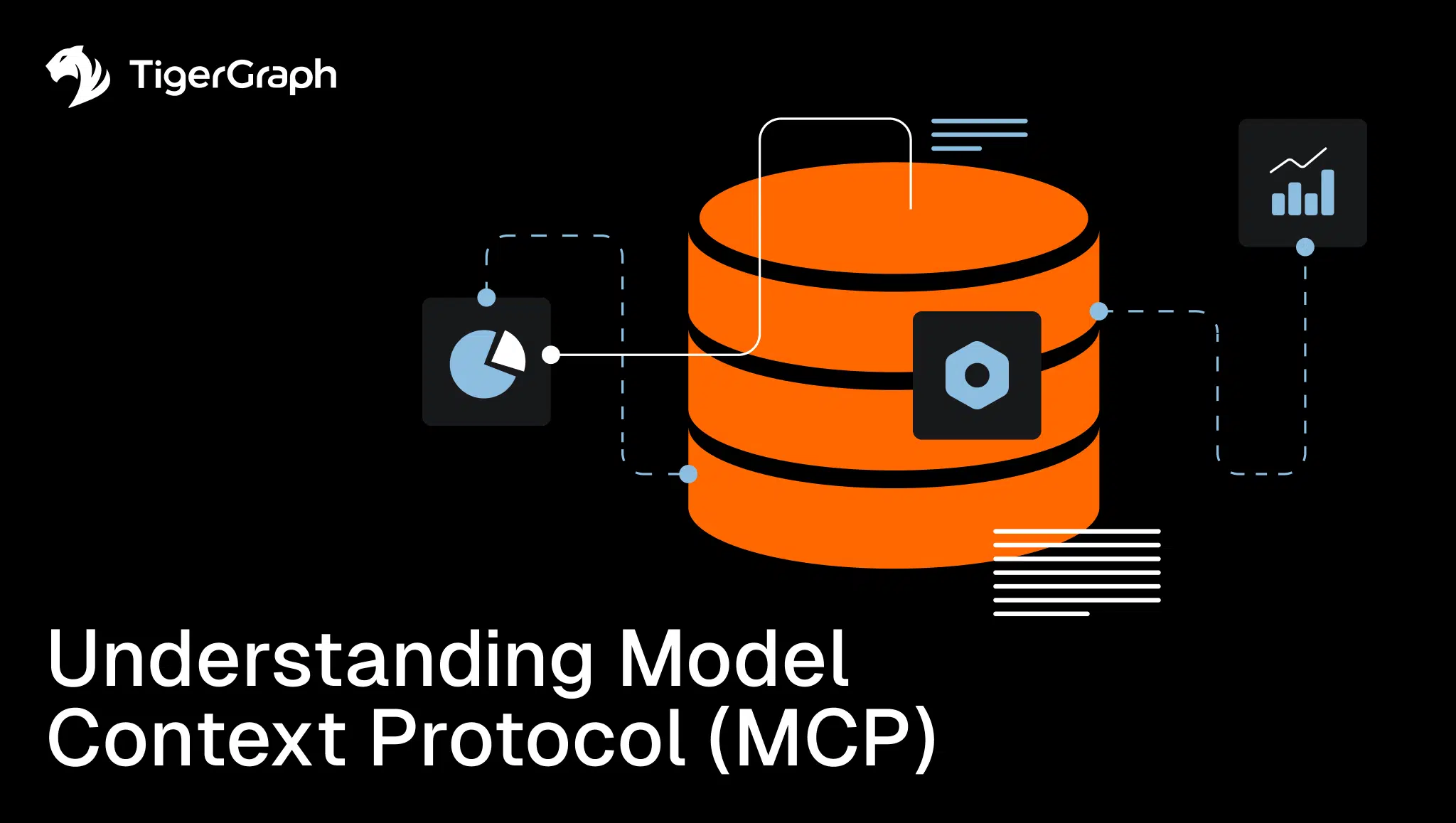
    Understanding Model Context Protocol (MCP)

    The Model Context Protocol (MCP) is an open standard that aims to streamline how AI models, particularly Large Language Models (LLMs), connect with external data sources and tools. Think of it as a universal language that allows AI to access and utilize information from various systems in a standardized way.

    Discover
    Concept
    ConceptMay 15, 2025

    Scalable Graph Database

    What the Enterprise Gets Wrong About Scalable Graph Databases Many enterprises assume scalability in a graph database simply means storing more data or expanding disk capacity. But graph workloads aren’t just about size—they’re about traversals, pattern matching, deep-link reasoning, and concurrent execution. Systems may buckle under real-world pressure without scaling query performance, ingestion

    Discover
    Concept
    BeginnerConceptApr 18, 2025

    Graph Machine Learning

    Graph machine learning is a class of machine learning techniques designed specifically to learn from graph-structured data. Unlike traditional ML approaches that treat each data point as independent and flat (like a row in a table), GML captures individual entities’ attributes and the relationships between them. This allows it to

    Discover
    Concept
    BeginnerConceptApr 18, 2025

    Graph Algorithms

    What the Enterprise Gets Wrong About Graph Algorithms? Enterprises often treat graph algorithms as interchangeable utilities—plug-in tools that can run on top of any system. This oversimplifies their purpose and underestimates their technical requirements. Two common missteps are applying graph algorithms to non-graph data structures (like relational or key-value stores) and assuming a handful of

    Discover
    Concept
    ConceptApr 4, 2025

    GraphRAG

    GraphRAG (Graph Retrieval-Augmented Generation) enhances traditional RAG by embedding knowledge graphs into the LLM inference process. Rather than retrieving isolated documents or embeddings, the system traverses a graph to extract entities, relationships, behaviors, and rules—providing context that’s structured, traversable, and explainable. In contrast to flat vector stores, wh

    Discover
    1…456…70