
TigerGraph
ResourcesPathfinderDiscord(opens in a new tab)
Resources

Everything, In One Wall

Videos, courses, hands-on tutorials, docs, and blog posts. One place for every phase of learning.

TigerGraph
ResourcesPathfinderDiscord(opens in a new tab)

© 2026 Tiger Graph Dev Hub. All rights reserved.

  • Privacy Policy|
  • Terms of Service

Applied · 3

Clear all
  • Beginner
  • Code & samples
  • Blog posts

Levels

  • All Resources
  • Beginner
  • Intermediate
  • Advanced

Categories

  • Videos514
  • Docs644
  • Glossary50
  • Blog posts222

Assets

  • Definition36
  • Tutorial113
  • How-to guide319
  • Reference312

Tags

  • #Fraud and AML
  • #Entity resolution
  • #Recommendations
  • #GraphRAG and AI
  • #Graph machine learning
  • #Search
  • #Network analysis
  • #Performance and scale
  • #Running TigerGraph

41 resources · page 2 of 4

NewestOldest
3 Col Grid2 Col GridList
BeginnerArticleApr 8, 2026
Code & samples
126
  • Graph Resources52
  • Concept
    109
  • Troubleshooting12
  • Security advisory4
  • Runbook
  • Article173
  • Case study26
  • Talk298
  • Release note24
  • Demo114
  • Webinar12
  • Event12
  • Report24
  • #Evaluating graph
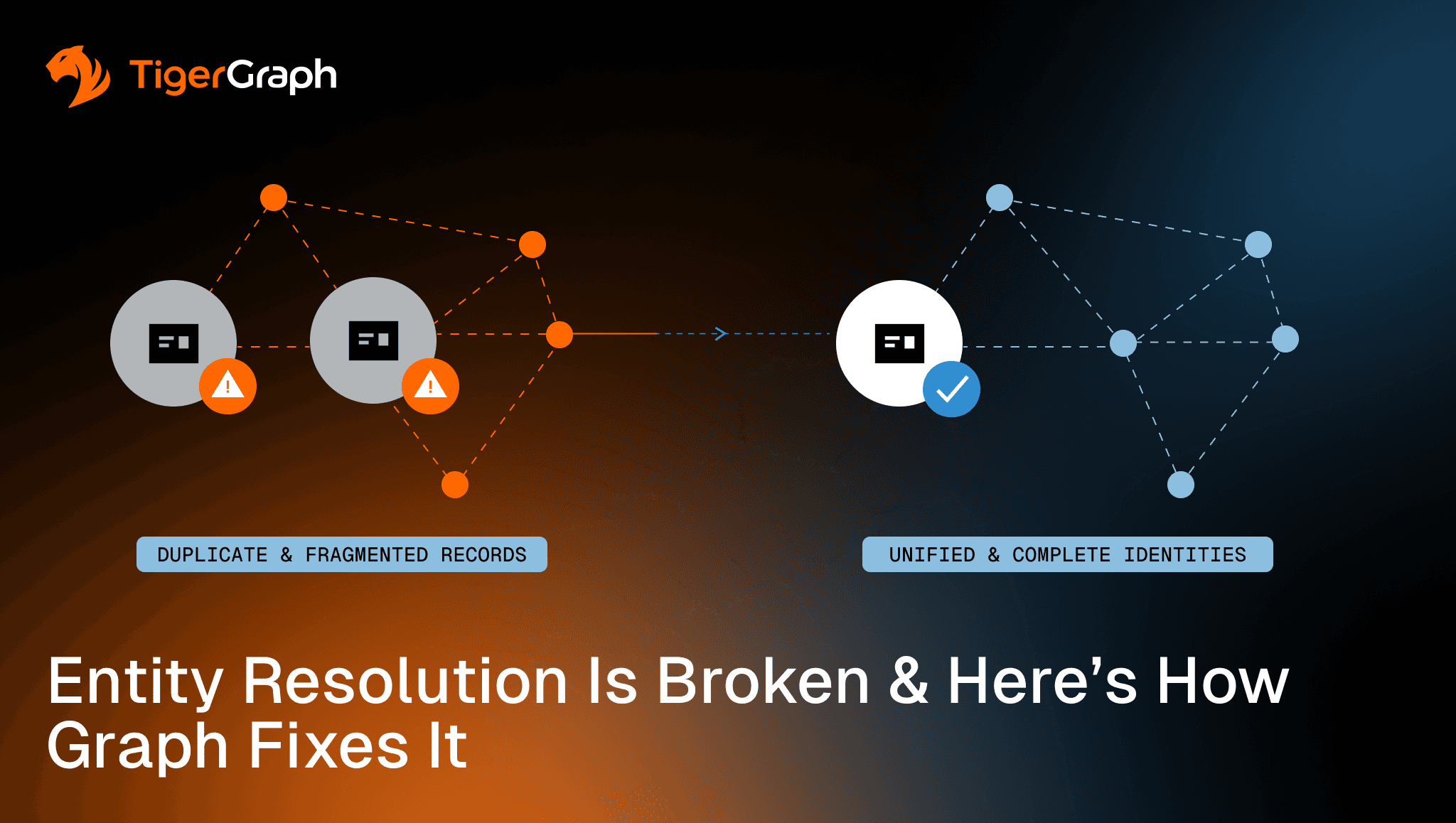
  • Entity Resolution is Broken & Here’s How Graph Fixes it

    Most enterprises believe they have a data quality problem. In reality, they have an entity problem. Names change, addresses change, and emails are reused. Companies restructure, and customers open multiple accounts. Beyond that, records fragment across CRM systems, billing platforms, compliance databases, and operational tools.
    Discover
    BeginnerArticleApr 8, 2026

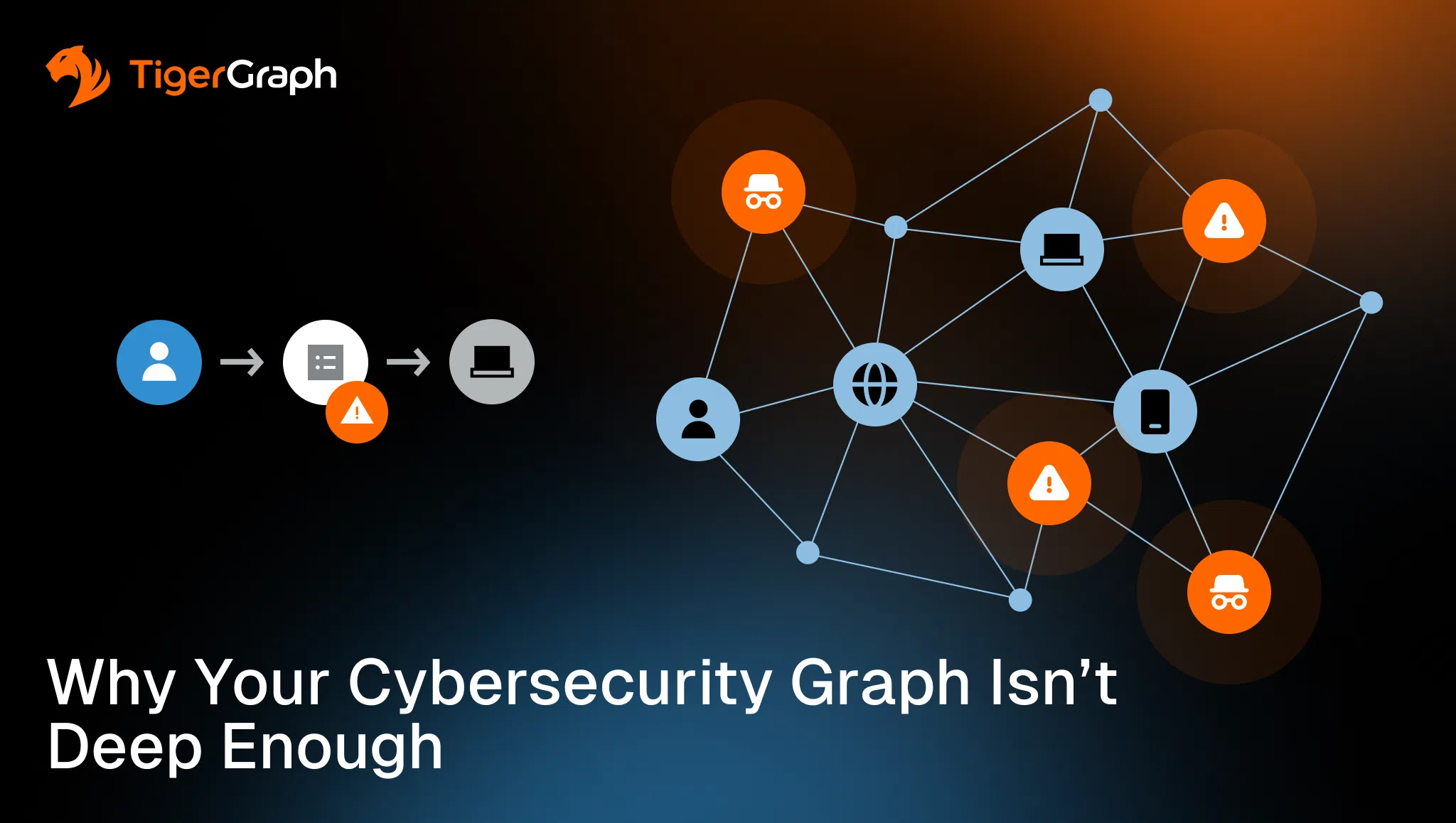
    Why Your Cybersecurity Graph isn’t Deep Enough

    Many organizations have introduced graph technology into their cybersecurity stack. They connect users to IP addresses, devices to sessions, and domains to authentication attempts. Compared to flat reporting tables, this represents real progress. But connecting adjacent events is not the same as modeling attack structure. Modern attacks are

    Discover
    BeginnerDefinitionFeb 11, 2026

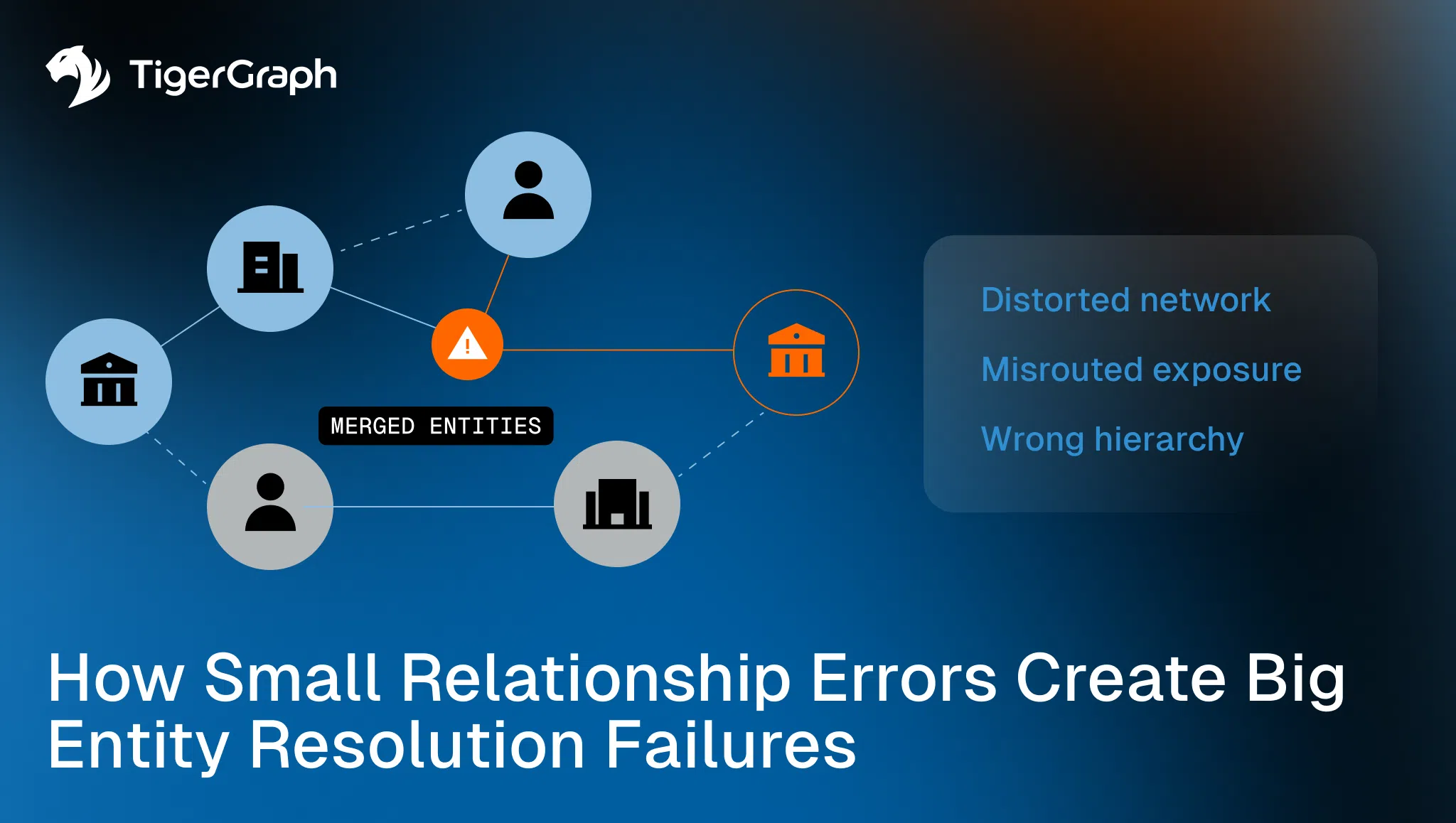
    How Small Relationship Errors Create Big Entity Resolution Failures

    Entity resolution is often discussed as a record-matching problem, with a focus on which records belong together and which do not. But many resolution failures have less to do with the records themselves and more to do with the relationships that connect them. In graph-based systems,

    Discover
    BeginnerHow-to guideJan 13, 2026

    High-Impact Graph Database Project Ideas for Modern Data Teams

    Modern data teams do not need more abstract diagrams or theoretical exercises. They need graph projects that help them understand what is really happening inside their systems. When a graph is modeled cleanly, the relationships stop being guesswork and start acting like a diagnostic instrument. Suddenly,

    Discover
    BeginnerHow-to guideJan 8, 2026

    Practical Graph Database Schema Design: Modeling Connections for Speed and Clarity

    High-Performance Graph Database Schema Design for Connected Data | TigerGraph A graph database schema defines the structure of data, including the entities in the domain, the connections between them, and the rules that shape those connections. It acts as the blueprint for how information is stored and how traversal should behave. A clear schema makes

    Discover
    BeginnerConceptJan 8, 2026

    RDF vs. Property Graph: Choosing the Right Foundation for Knowledge Graphs

    Every organization that builds a knowledge graph faces the same architectural crossroads at some point. Should the system use RDF for semantic precision, or a property graph for analytical performance? This choice determines so much, like how relationships are represented and how queries scale.

    Discover
    BeginnerArticleDec 17, 2025

    Should Graphs Power AI Before or After the LLM?

    Enterprises designing modern AI systems eventually run into the same architectural crossroads. They see that a graph can strengthen their AI. Should the graph be used in the retrieval phase, shaping the context the model receives before the LLM generates a response, or in the validation

    Discover
    BeginnerArticleDec 3, 2025

    Modeling Molecules and Beyond: How Graph Databases Unlock Scientific Discovery

    Graph technology has become important in scientific research because researchers across biology, chemistry and drug discovery face a shared challenge. Scientific data is becoming larger, more interconnected, and more difficult to explore using traditional systems. Many of the systems they study, including molecules, pa

    Discover
    BeginnerArticleDec 1, 2025

    How Graph Databases Move You From Data Points to Decisions

    Traditional databases were built for ledgers, not relationships. Yet every modern business problem, from fraud detection to customer personalization and supply-chain visibility, depends on how data points connect. That’s why graph database use cases are reshaping enterprise analytics by modeling real-world use cases as relationships

    Discover
    BeginnerConceptOct 22, 2025

    How Knowledge Graphs Reveal Meaning Hidden in Enterprise Data

    Traditional analytics systems focus on isolated data points, but context gives information meaning. From customer insight to fraud detection, every decision depends on understanding relationships across systems. That’s why knowledge graph use cases are transforming enterprise data strategy. They connect people, processes, and events to

    Discover
    BeginnerConceptOct 20, 2025

    The Power of Graph Relationships: Turning Isolated Data into Connected Insights

    Enterprises do not suffer from a lack of data, but they do suffer from data silos and a lack of connection. Context is lost. Adding relationships to the data solves this problem. Graph relationships map how people, accounts, devices, suppliers, and policies interact. And

    Discover
    BeginnerArticleAug 28, 2025

    Vector Embeddings Reveal Hidden Layers in AI

    In AI, the magic isn’t in what you see—it’s in what the system understands. That understanding is powered by vector embeddings, which are mathematical representations of complex data, such as sentences, images, human beings, or behaviors. These vectors reduce this complex information into numerical formats that machines can

    Discover
    1234