TigerGraph
ResourcesPathfinderDiscord(opens in a new tab)
Resources

Everything, In One Wall

Videos, courses, hands-on tutorials, docs, and blog posts. One place for every phase of learning.

TigerGraph
ResourcesPathfinderDiscord(opens in a new tab)

© 2026 Tiger Graph Dev Hub. All rights reserved.

  • Privacy Policy|
  • Terms of Service

Applied · 4

Clear all
  • Tutorial
  • Concept
  • #GraphRAG and AI
  • #Performance and scale

Levels

  • All Resources
  • Beginner
  • Intermediate
  • Advanced

Categories

  • Videos514
  • Docs644

32 resources · page 1 of 3

NewestOldest
3 Col Grid2 Col GridList
IntermediateTutorialAug 18, 2026
Glossary
50
  • Blog posts222
  • Code & samples126
  • Graph Resources52
  • Assets

    • Definition36
    • Tutorial113
    • How-to guide319
    • Reference312
    • Concept109
    • Troubleshooting12
    • Security advisory4
    • Runbook
    • Article173
    • Case study26
    • Talk298
    • Release note24
    • Demo114
    • Webinar12
    • Event12
    • Report24

    Tags

    • #Fraud and AML
    • #Entity resolution
    • #Recommendations
    • #GraphRAG and AI
    • #Graph machine learning
    • #Search
    • #Network analysis
    • #Performance and scale
    • #Running TigerGraph
    • #Evaluating graph

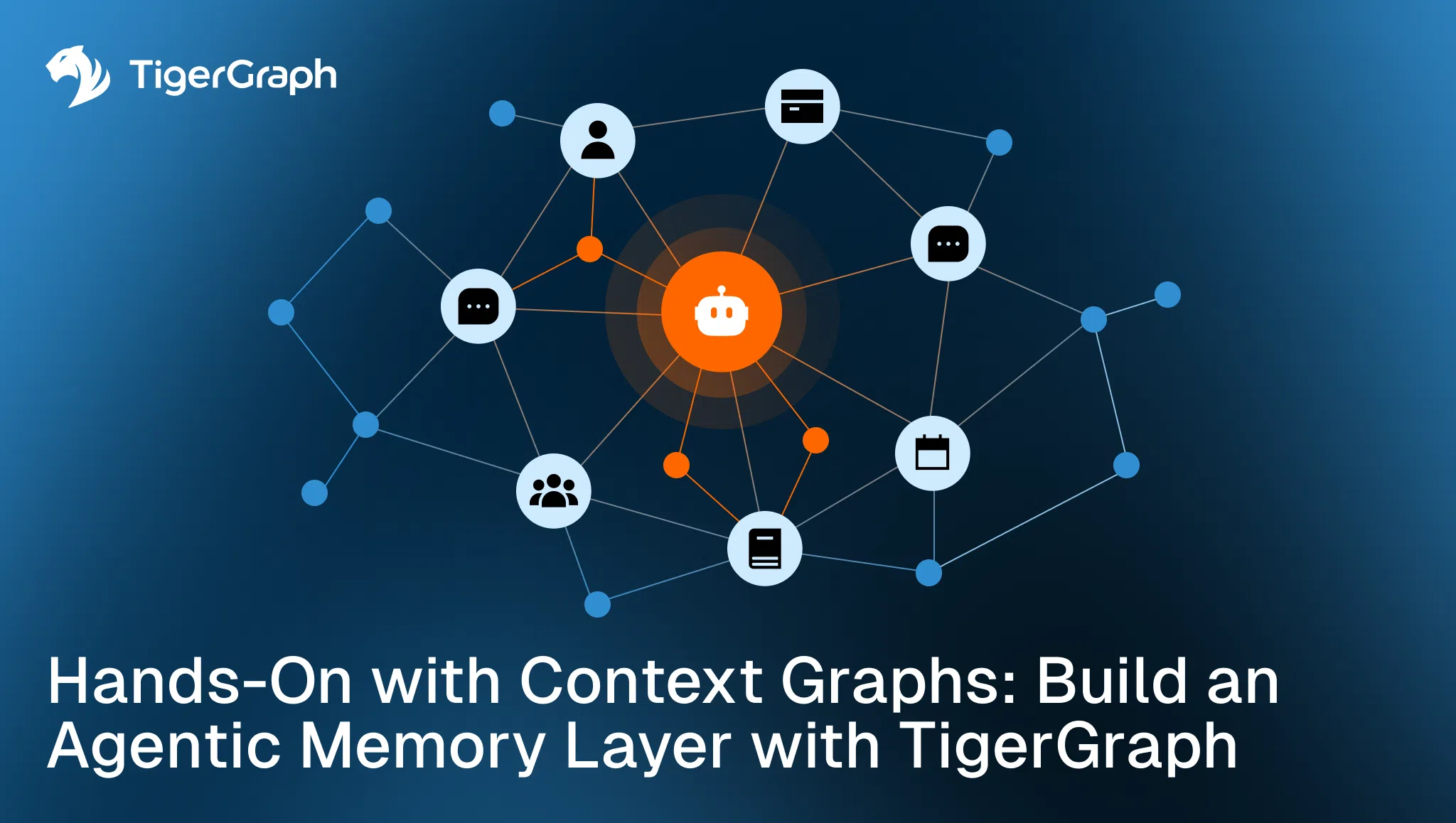
    Hands-On with Context Graphs: Build an Agentic Memory Layer with TigerGraph

    AI agents forget between sessions. Learn how to build a TigerGraph context graph that gives your agent persistent, relationship-aware memory in five steps.
    Discover
    ConceptAug 4, 2026

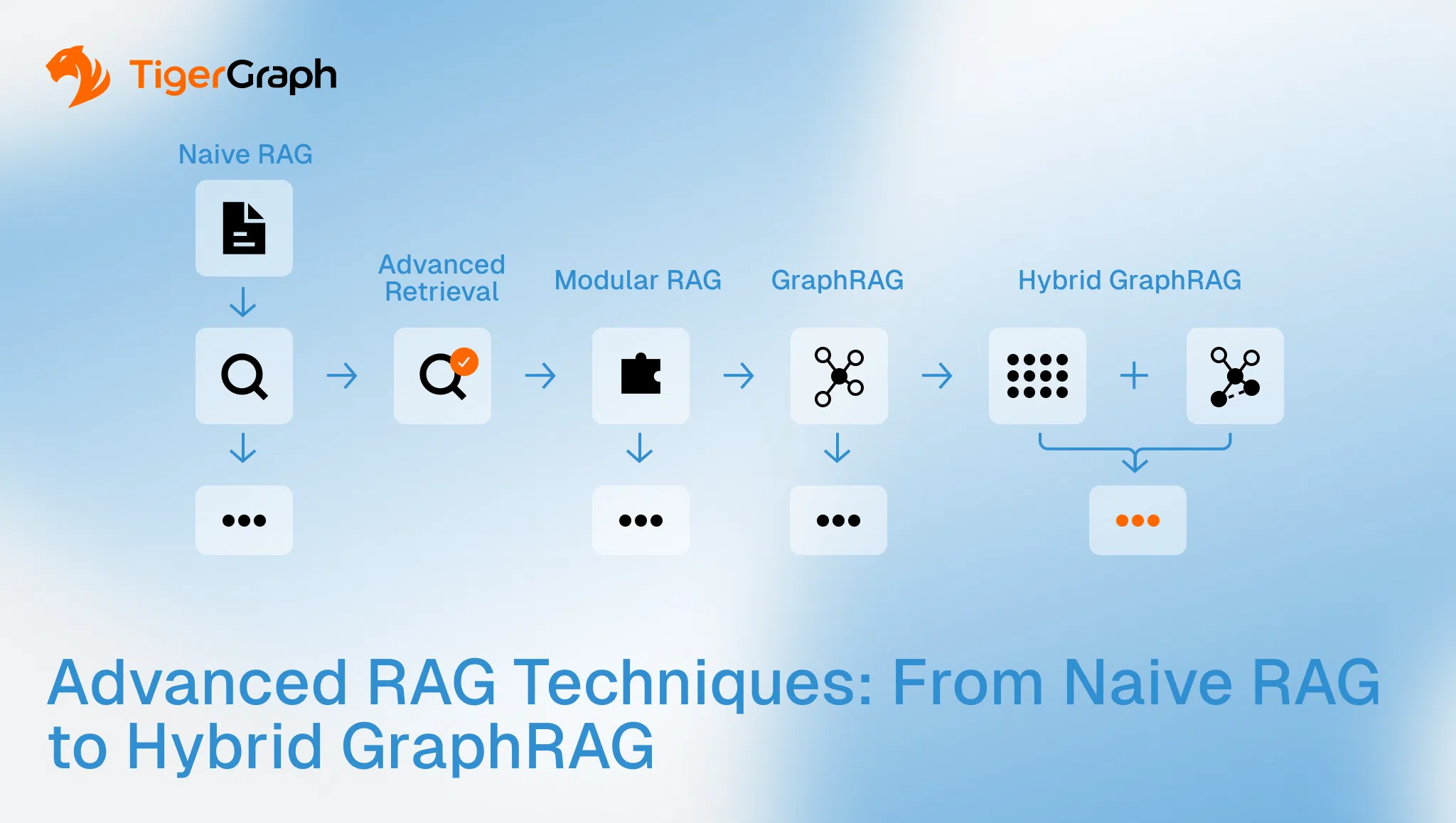
    Advanced RAG Techniques: From Naive RAG to Hybrid GraphRAG

    Discover advanced RAG techniques that fix retrieval quality ceilings, from chunking and re-ranking to GraphRAG and hybrid GraphRAG. Find the right architecture for your enterprise AI workload.

    Discover
    Concept
    ConceptApr 10, 2026

    Multimodal Embeddings

    Multimodal embeddings are vector representations that allow different types of inputs, such as text and images, to be compared in the same space. Instead of creating separate representations for each format, a model maps text, images, or other inputs into a shared embedding space. When two items land close together in

    Discover
    Tutorial28 min · Feb 12, 2026

    Build Your First AI Ready Graph App in 30 Mins with TigerGraph Savanna

    Most AI and graph projects sound great on paper and then stall in setup, schema debates, or tooling sprawl. This webinar is different. Watch “Build Your First AI-Ready Graph App in 30 Minutes”, for a hands-on session using TigerGraph Savan

    Discover
    BeginnerConceptJan 8, 2026

    RDF vs. Property Graph: Choosing the Right Foundation for Knowledge Graphs

    Every organization that builds a knowledge graph faces the same architectural crossroads at some point. Should the system use RDF for semantic precision, or a property graph for analytical performance? This choice determines so much, like how relationships are represented and how queries scale.

    Discover
    BeginnerConceptOct 20, 2025

    The Power of Graph Relationships: Turning Isolated Data into Connected Insights

    Enterprises do not suffer from a lack of data, but they do suffer from data silos and a lack of connection. Context is lost. Adding relationships to the data solves this problem. Graph relationships map how people, accounts, devices, suppliers, and policies interact. And

    Discover
    AdvancedConceptOct 10, 2025

    Reducing AI Hallucinations: Why LLMs Need Knowledge Graphs for Accuracy

    Every AI leader wants helpful assistants, not confident liars. Large language models (LLMs) are powerful, but without guardrails, they hallucinate, improvise sources, and miss context across systems. Pairing LLMs and knowledge graphs fixes that gap. This architecture turns raw generation into grounded reasoning: the model

    Discover
    AdvancedConceptOct 9, 2025

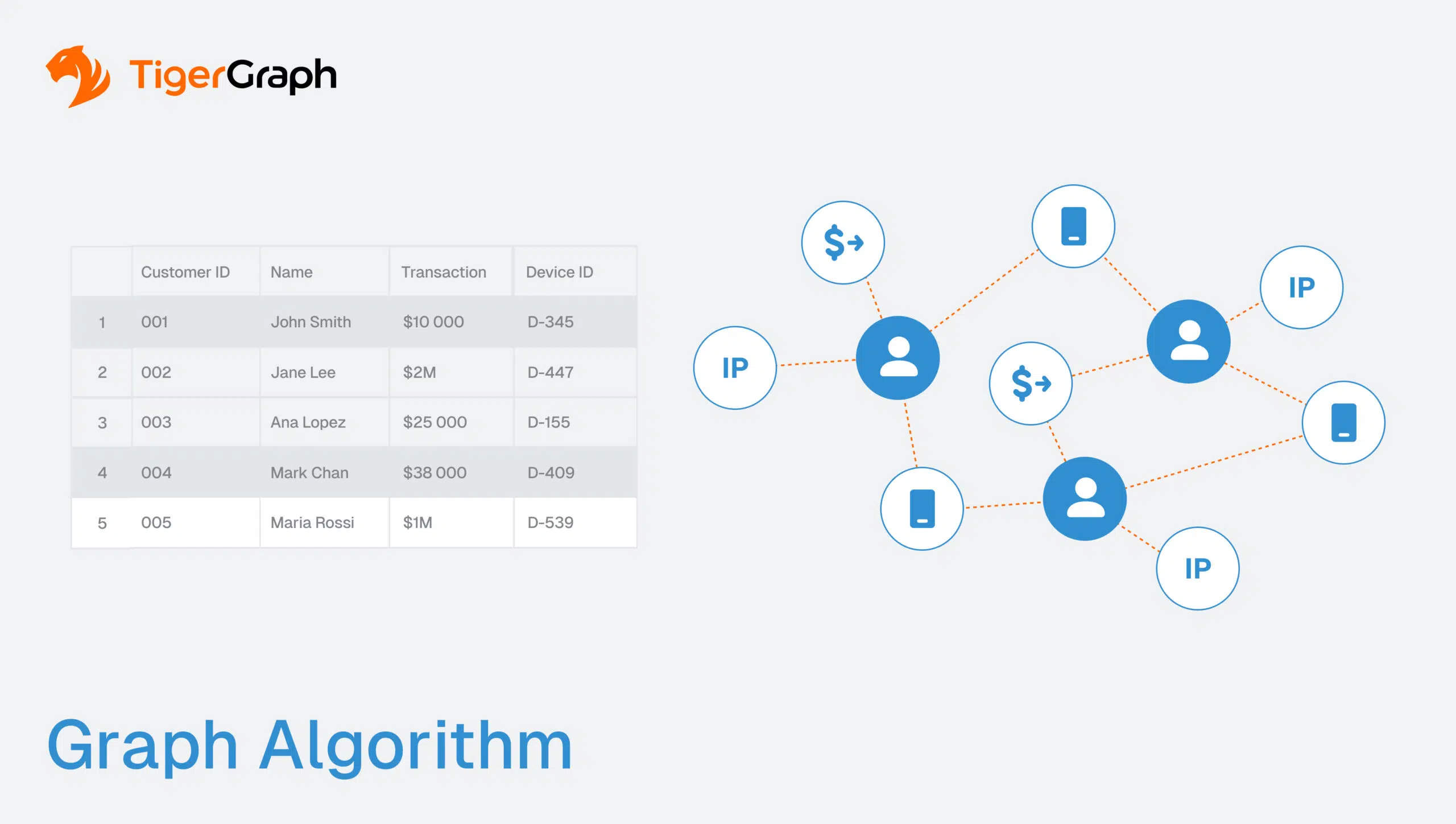
    Graph Algorithms: The Secret Engine Behind Faster, Smarter Business Growth

    Every enterprise has tons of data, but most struggle to use it in ways that drive strategy. Graph algorithms are the hidden engines that bring those dots to life, revealing how people, accounts, devices, or products interact. Instead of isolated records, they uncover the relationships

    Discover
    Concept
    BeginnerConceptSep 19, 2025

    Contextual Reasoning in Graph AI

    Contextual reasoning in graph AI is the ability of an AI system to interpret data as part of a connected network of relationships. Instead of evaluating attributes in a vacuum, contextual reasoning analyzes how entities relate to one another. This lets you see more characteristics and influences, leading

    Discover
    Concept
    ConceptSep 12, 2025

    Graph Data Loading Performance

    Graph data loading performance measures how quickly a graph database can ingest, process, and prepare connected data for use. Unlike simple record inserts in relational systems, graph loading has to capture not only entities (nodes) but also the relationships (edges) that connect them. The performance of this process is

    Discover
    Concept
    ConceptAug 12, 2025

    Graph Database Performance

    Graph database performance describes how well a graph system handles its most critical tasks, including ingesting connected data, executing queries, navigating complex relationships, and running graph algorithms. It’s not just about raw speed. A high-performing graph database can respond quickly to real-world questions, scale as data grows, and stay reliable

    Discover
    IntermediateTutorialJun 6, 2025

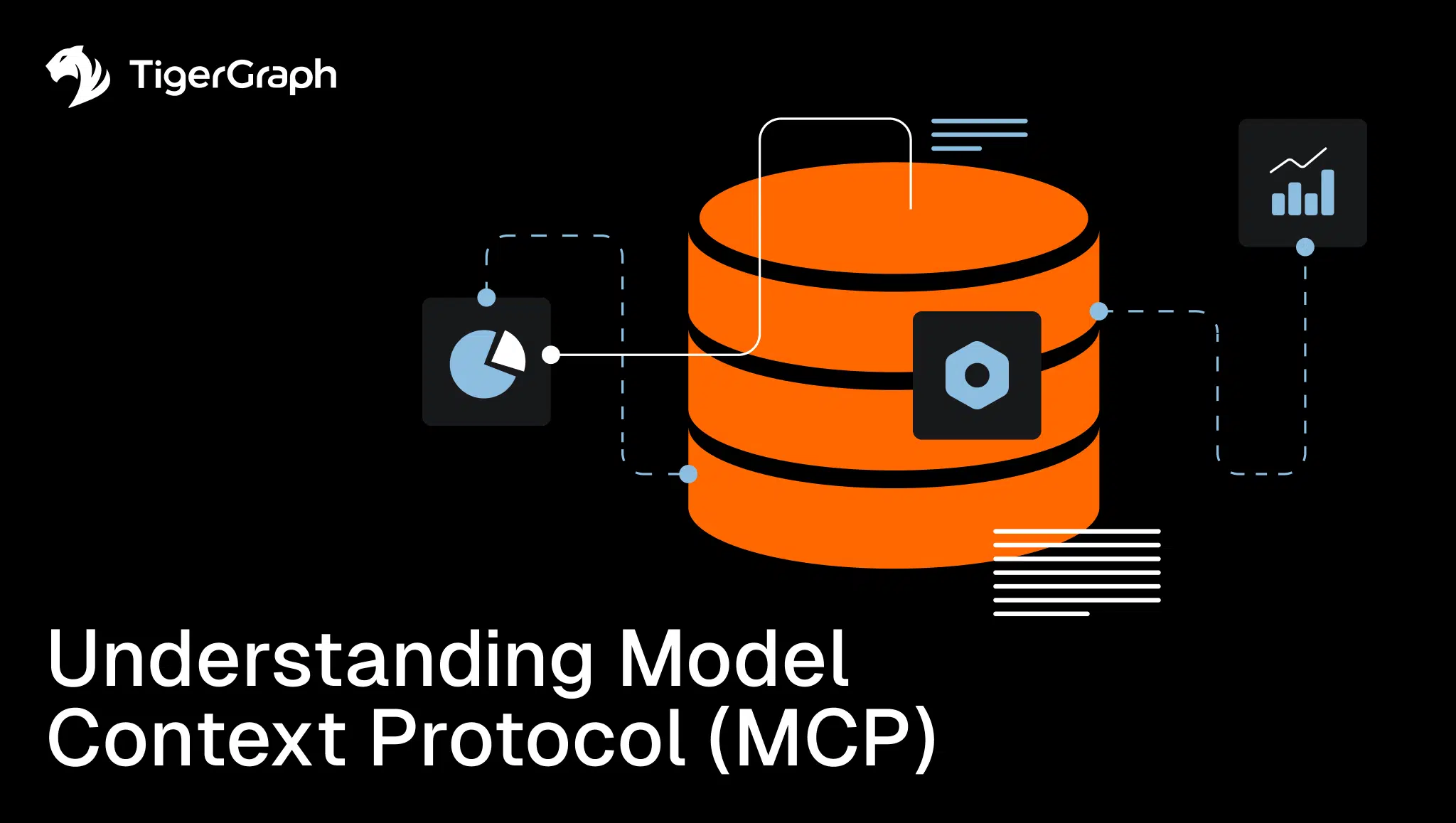
    Understanding Model Context Protocol (MCP)

    The Model Context Protocol (MCP) is an open standard that aims to streamline how AI models, particularly Large Language Models (LLMs), connect with external data sources and tools. Think of it as a universal language that allows AI to access and utilize information from various systems in a standardized way.

    Discover
    123