
TigerGraph
ResourcesPathfinderDiscord(opens in a new tab)
Resources

Everything, In One Wall

Videos, courses, hands-on tutorials, docs, and blog posts. One place for every phase of learning.

TigerGraph
ResourcesPathfinderDiscord(opens in a new tab)

© 2026 Tiger Graph Dev Hub. All rights reserved.

  • Privacy Policy|
  • Terms of Service

Applied · 3

Clear all
  • Beginner
  • #Graph machine learning
  • #Performance and scale

Levels

  • All Resources
  • Beginner
  • Intermediate
  • Advanced

Categories

  • Videos514
  • Docs644
  • Glossary50
  • Blog posts222

Assets

  • Definition36
  • Tutorial113
  • How-to guide319
  • Reference312

Tags

  • #Fraud and AML
  • #Entity resolution
  • #Recommendations
  • #GraphRAG and AI
  • #Graph machine learning
  • #Search
  • #Network analysis
  • #Performance and scale
  • #Running TigerGraph
  • #Evaluating graph

14 resources · page 1 of 2

NewestOldest
3 Col Grid2 Col GridList
BeginnerArticleSep 18, 2026

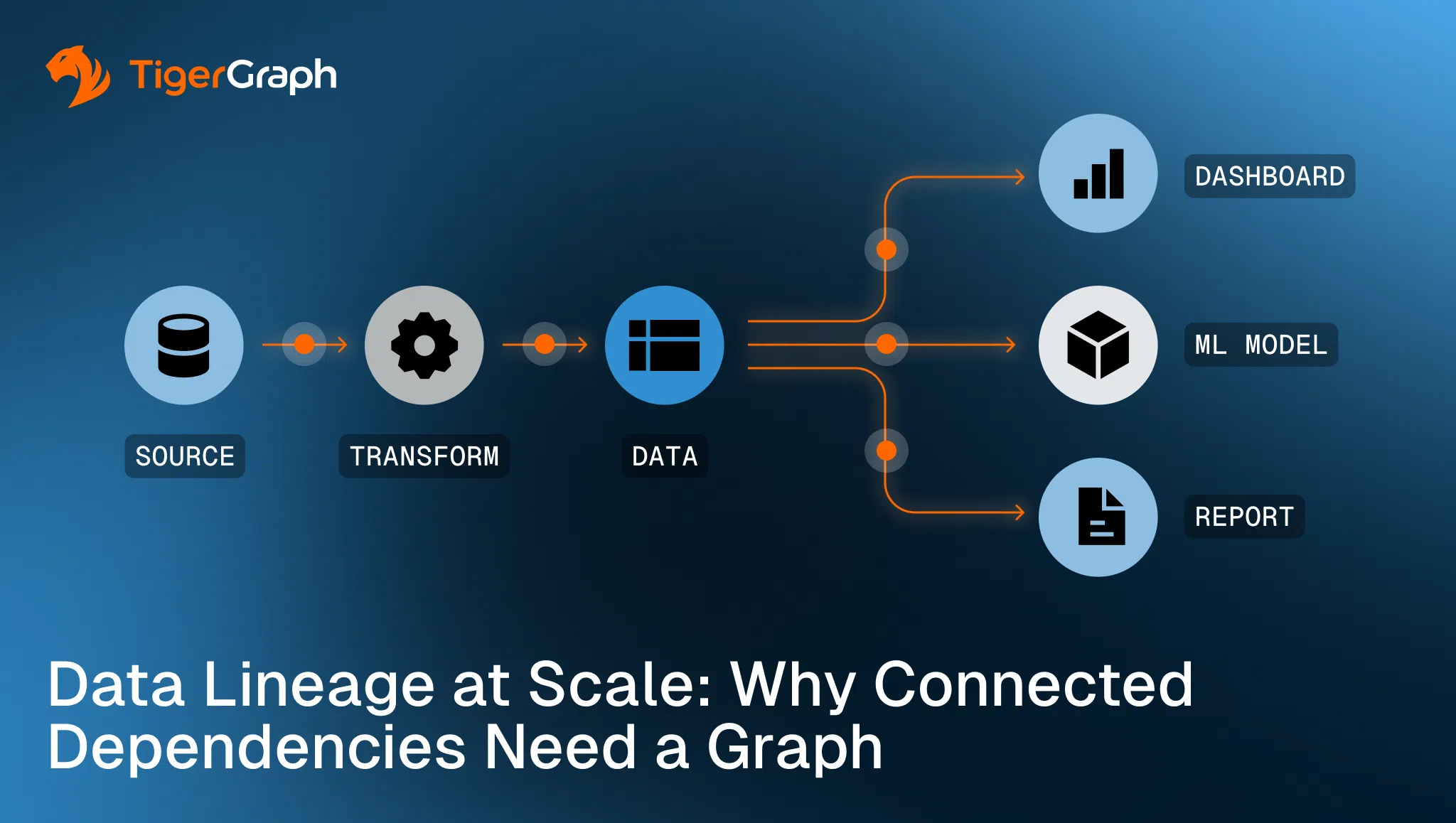
Data Lineage at Scale: Why Connected Dependencies Need a Graph

Code & samples
126
  • Graph Resources52
  • Concept
    109
  • Troubleshooting12
  • Security advisory4
  • Runbook
  • Article173
  • Case study26
  • Talk298
  • Release note24
  • Demo114
  • Webinar12
  • Event12
  • Report24
  • Traditional data lineage tools struggle with complex dependencies. Learn why graph databases are the natural foundation for enterprise data lineage at scale.
    Discover
    Concept
    BeginnerConceptApr 10, 2026

    Propagation in Graphs

    Propagation in graphs refers to the process of spreading status information, entity descriptions, computed values, or other data across connected entities within a network. In a graph, data is represented using nodes and edges. Nodes represent entities such as people, accounts, devices, or products. Edges represent the relationships connecting those

    Discover
    BeginnerHow-to guideJan 8, 2026

    Practical Graph Database Schema Design: Modeling Connections for Speed and Clarity

    High-Performance Graph Database Schema Design for Connected Data | TigerGraph A graph database schema defines the structure of data, including the entities in the domain, the connections between them, and the rules that shape those connections. It acts as the blueprint for how information is stored and how traversal should behave. A clear schema makes

    Discover
    BeginnerConceptJan 8, 2026

    RDF vs. Property Graph: Choosing the Right Foundation for Knowledge Graphs

    Every organization that builds a knowledge graph faces the same architectural crossroads at some point. Should the system use RDF for semantic precision, or a property graph for analytical performance? This choice determines so much, like how relationships are represented and how queries scale.

    Discover
    BeginnerConceptOct 20, 2025

    The Power of Graph Relationships: Turning Isolated Data into Connected Insights

    Enterprises do not suffer from a lack of data, but they do suffer from data silos and a lack of connection. Context is lost. Adding relationships to the data solves this problem. Graph relationships map how people, accounts, devices, suppliers, and policies interact. And

    Discover
    Definition
    BeginnerDefinitionSep 18, 2025

    Graph Neural Network (GNN)

    A Graph Neural Network is a machine learning architecture that learns from graph-structured data. Instead of treating data as flat tables or grids, GNNs learn how entities (nodes) relate to each other by passing messages across connections (edges) and aggregating neighborhood information over multiple layers.

    Discover
    BeginnerArticleJun 13, 2025

    Scaling Trust & Detecting Outliers with Graph Neural Networks

    Our world is increasingly fueled by AI-driven decision-making, so trustworthy data is non-negotiable. When algorithms determine who gets a loan, who passes a fraud screening, or which transactions are flagged for investigation, organizations must trust that these decisions are not only accurate but also explainable and

    Discover
    BeginnerArticleJun 7, 2025

    How Graph Neural Networks (GNN) Outperform Traditional Machine Learning

    Traditional machine learning can tell you a lot but not everything, and especially not when the relationships between your data points are where the real intelligence lives. And this is a big problem. Graph Neural Networks (GNNs) fundamentally change how we think about machine learning by

    Discover
    Concept
    BeginnerConceptApr 18, 2025

    Graph Machine Learning

    Graph machine learning is a class of machine learning techniques designed specifically to learn from graph-structured data. Unlike traditional ML approaches that treat each data point as independent and flat (like a row in a table), GML captures individual entities’ attributes and the relationships between them. This allows it to

    Discover
    Definition
    BeginnerDefinitionApr 4, 2025

    Graph AI

    Graph AI is the fusion of artificial intelligence and graph technology. At its core, it applies machine learning, inference, and autonomous reasoning to data structured as graphs—collections of entities (nodes) and their connections (edges). But unlike traditional AI, which treats data points in isolation, Graph AI draws meaning from how data

    Discover
    BeginnerArticleMar 18, 2025

    Unleashing AI’s Potential: Why Graph Databases are the Secret Weapon

    Artificial intelligence is rapidly transforming industries, but its biggest challenge remains: understanding relationships within data at scale. Traditional databases fall short, but graph databases, especially TigerGraph, bridge this gap, unlocking AI’s full potential Graph Databases: The Foundation for Smarter AI Traditional d

    Discover
    BeginnerHow-to guideSep 15, 2021

    Decision Trees in TigerGraph

    This blog post was originally featured on Towards Data Science and is written by Parker Erickson, Data Science / Machine Learning Intern at TigerGraph Make ML Classifications Inside Your Database Introduction During my time at Optum, 3 trends were very important — explainable machine learning models, knowledge graph data representation, and execution of rules within

    Discover
    12