IntermediateTutorialOct 15, 2026Migrating from Neo4j to TigerGraph: A Practical Architecture, Data, and Query PlaybookMoving from Neo4j to TigerGraph? Learn how to assess your architecture, map your data model, handle Cypher queries, and validate performance before cutover.Discover
WebinarSep 23, 2026The Identity Layer for AI: Transforming AML & KYC with Graph-Powered Entity ResolutionDiscover
IntermediateTutorialAug 18, 2026Hands-On with Context Graphs: Build an Agentic Memory Layer with TigerGraphAI agents forget between sessions. Learn how to build a TigerGraph context graph that gives your agent persistent, relationship-aware memory in five steps.Discover
DefinitionJul 17, 2026Graph Neural Networks Explained: When AI Learns from ConnectionsLearn what a graph neural network is, how it learns from connections, and where GNNs outperform tabular models.Discover
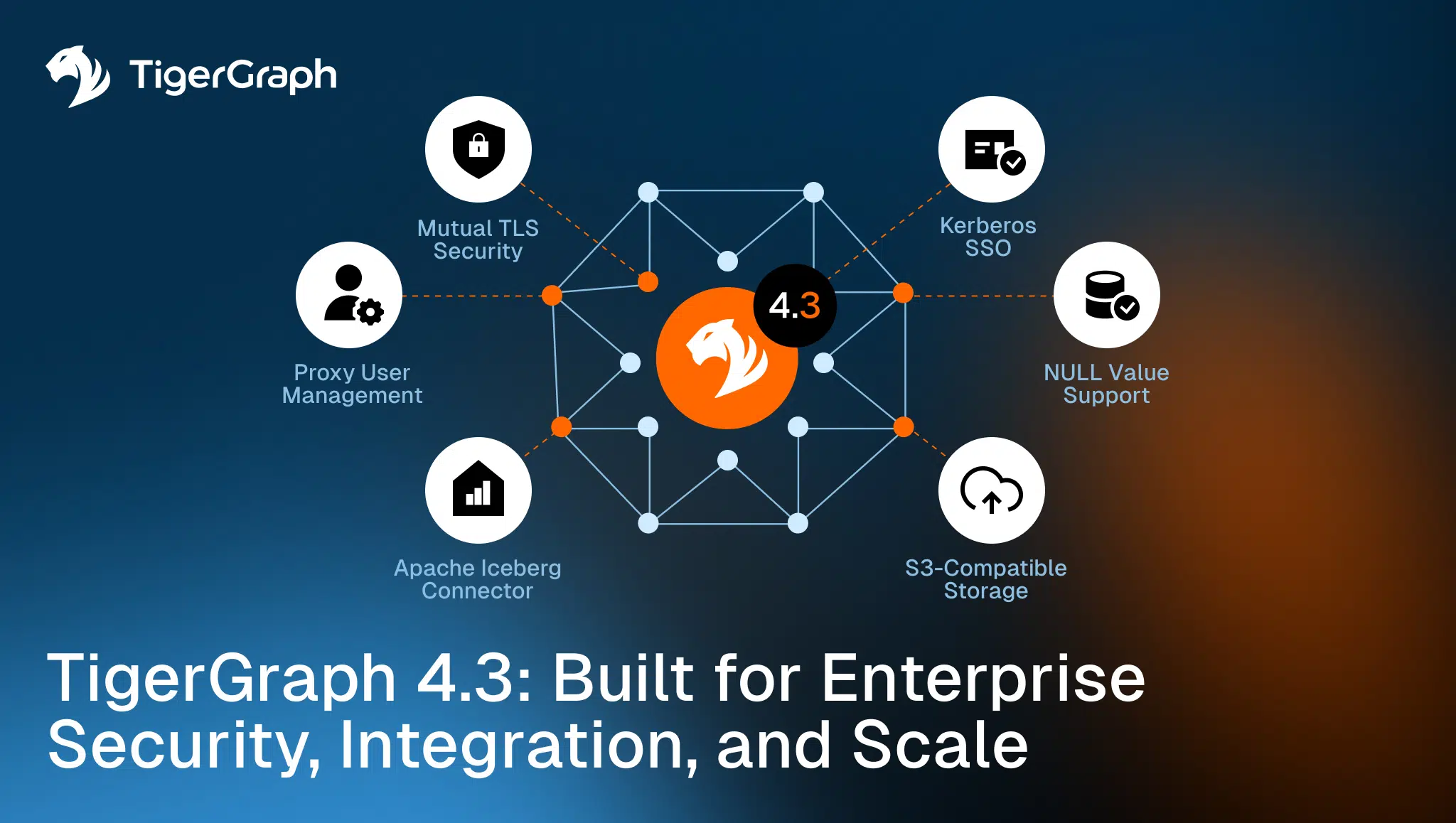
AdvancedRelease noteJul 15, 2026TigerGraph 4.3: Built for Enterprise Security, Integration, and ScaleGraph is becoming a core part of enterprise data and AI architecture. The next phase of graph adoption will not be determined only by what graph technology can do. It will be determined by how securely and seamlessly graph can operate within the enterprise. The realDiscover
DefinitionDefinitionApr 27, 2026Bidirectional RelationshipA bidirectional relationship is a connection between two entities in which each side can be accessed or traversed from the other. If a data system user searches for what a bidirectional relationship is, they will learn it is a two-way connection between data elements. In contrast, a directional relationship allowsDiscover
DefinitionDefinitionApr 10, 2026Recommendation SystemA recommendation system is a data-driven framework that identifies and ranks items based on predicted relevance to a user, entity, or context. When someone asks what a recommendation system or recommendation engine is, they are asking how platforms decide what to offer first. These systems analyze behavioral data (such asDiscover
DefinitionDefinitionApr 10, 2026Agentic AIAgentic AI refers to artificial intelligence systems that can plan and execute actions in pursuit of a defined goal. Most traditional AI systems respond to a prompt and generate a single output. For example, you ask a question and the system produces an answer. Once the response is delivered, the interactionDiscover
DefinitionBeginnerDefinitionApr 10, 2026Shortest PathThe shortest path is the most efficient way to travel from one point to another within a network. In graph theory, the shortest path in a graph refers to calculating the route between two nodes that minimizes total cost. A node represents a point, and edges connect those points. EachDiscover
DefinitionDefinitionApr 6, 2026EmbeddingAn embedding in machine learning is a way to represent complex information as numbers so a system can compare items consistently. This matters because many real-world inputs, such as language, images, audio, and behavior patterns, contain rich, nuanced information whose meaning isn’t adequately captured by a set of fields in aDiscover