
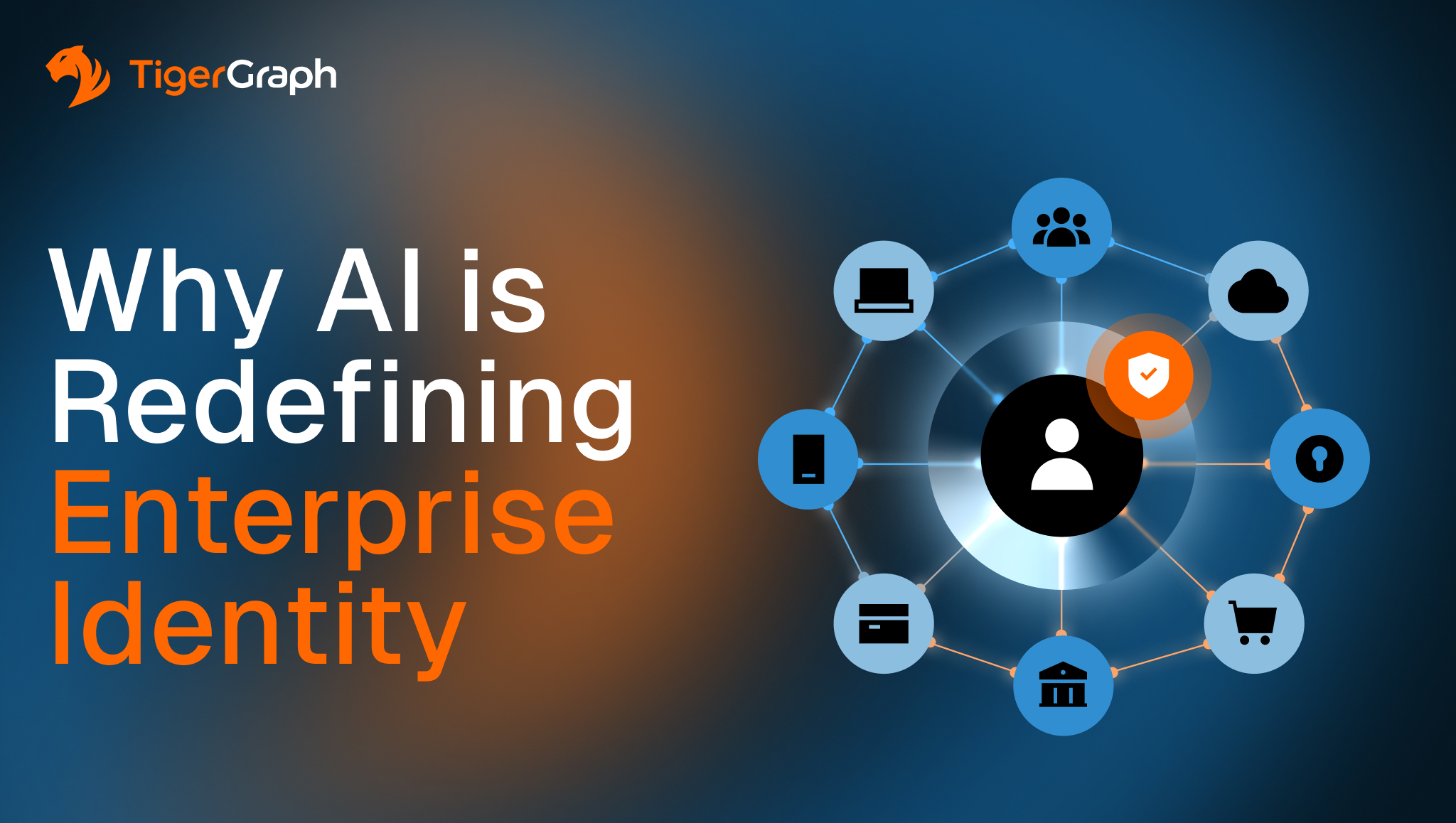
Why AI Is Redefining Enterprise Identity
Over the past two years, nearly every major AI announcement has focused on making models more capable. Larger context windows. Better reasoning. More autonomous agents. Faster inference. Lower cost.
Recently, another announcement stood out, not because it introduced a more powerful model, but because it highlighted something far more fundamental.
Anthropic announced that identity verification would become a requirement for access to certain advanced AI capabilities. While the announcement focused on Anthropic’s platform, its significance extends well beyond a single company. It reflects a broader shift taking place across enterprise AI.
As AI systems become more capable and gain access to increasingly sensitive enterprise data, applications, and business processes, understanding who is interacting with those systems is becoming just as important as improving the models themselves.
For years, identity has been primarily viewed as a security function. Organizations authenticated employees before granting access to enterprise systems. Banks verified customers opening accounts. Healthcare providers protected patient records. Governments validated citizens before delivering public services.
Those requirements haven’t changed. What has changed is AI.
AI is no longer simply generating content or answering questions. It is beginning to write production software, analyze financial information, assist customer service representatives, summarize legal documents, identify cybersecurity threats, and increasingly execute business workflows on behalf of employees.
Every new capability expands the value AI can deliver. It also expands the importance of trusted identity.
As organizations move from AI experimentation to enterprise deployment, they are increasingly being forced to answer a question that has traditionally belonged to security and identity teams:
Who or what is interacting with our AI systems?
The question sounds straightforward. The architectural implications are not. Identity has always mattered. AI is making it one of the most important architectural considerations in the enterprise.
AI Is Changing Enterprise Identity
Traditional enterprise software operated within relatively predictable boundaries: 1. Employees logged into applications, 2. Customers authenticated through digital channels, 3. Partners accessed shared systems.
Identity existed primarily to determine whether someone should be granted access to a particular resource. Once authenticated, most applications assumed that identity remained trustworthy until proven otherwise. Enterprise AI changes that assumption.
Unlike traditional applications, AI systems are designed to interact continuously with people, enterprise data, business applications, and increasingly with other AI systems. They recommend actions, generate insights, automate decisions, and perform work that previously depended on human judgment.
AI is no longer sitting at the edge of enterprise architecture. It is becoming an active participant in enterprise operations. That fundamentally changes the role identity plays.
When an employee asks an AI assistant to summarize confidential financial results before an earnings announcement, the organization must determine whether that individual should have access to that information.
When an AI coding assistant is asked to modify production software, the organization must know whether the request originated from a trusted developer with the appropriate permissions.
When an AI-powered procurement assistant recommends approving a new supplier, identity extends beyond the employee submitting the request. The organization must also understand the supplier itself, its ownership structure, its relationships with other vendors, and whether hidden risks exist across that network.
These are no longer simple authentication decisions. They are trust decisions.
The more responsibility organizations give AI, the more confidence they must have in the identities interacting with it. This is why Anthropic’s announcement matters.
It acknowledges that increasingly powerful AI systems require a stronger understanding of who is accessing them. While every AI provider will implement identity differently, the underlying challenge is becoming universal.
Organizations deploying AI at scale will all face the same questions.1. Who is interacting with the system? 2. Should this identity have access? 3. Can this interaction be trusted?
These are no longer questions reserved for banking, healthcare, or government. They are becoming enterprise-wide architectural requirements. Identity is moving from the perimeter of enterprise architecture to its center.
Identity Is About More Than Verification
Most conversations about identity begin with verification. 1. Verify a government-issued ID, 2. Authenticate a login, 3. Complete multi-factor authentication, 4. Confirm a customer during onboarding.
These capabilities remain essential. They establish that an individual is who they claim to be at a specific moment in time. What they do not establish is whether that identity should be trusted.
That distinction has always mattered. AI is making it impossible to ignore.
Consider two employees who successfully authenticate using identical security controls. Both present valid credentials. Both complete multi-factor authentication. Both are granted access to an AI assistant connected to sensitive corporate information. On paper, the two identities appear equally trustworthy. In reality, they may represent very different levels of risk.
One employee accesses the system from a managed corporate device during normal business hours, works within familiar applications, and requests information consistent with their responsibilities. The second logs in from an unfamiliar device, through a previously unseen network, accesses data outside their normal role, and begins requesting unusually broad sets of confidential information.
Authentication confirms that both users successfully logged in. It does not explain whether both interactions deserve the same level of trust. The same challenge appears across virtually every enterprise identity use case.
A customer opens multiple accounts using different email addresses while sharing the same devices and payment methods. Several businesses appear unrelated until ownership records reveal common executives and beneficial ownership.
Multiple insurance claims originate from different individuals yet share addresses, phone numbers, vehicles, and repair shops.
A financial institution encounters what appear to be legitimate customers until transaction behavior reveals coordinated money movement across dozens of seemingly independent accounts.
Every identity successfully passes verification. The underlying risk becomes visible only when the relationships surrounding those identities are examined together. This distinction becomes even more important as AI systems assume greater responsibility.
AI excels at analyzing the information presented to it. What it cannot do is infer critical relationships that do not exist within the underlying data architecture.
If identity exists only as an isolated record, AI evaluates an isolated record. If identity exists as part of a connected network of customers, employees, organizations, devices, accounts, credentials, transactions, and historical interactions, AI gains the context needed to make better-informed decisions.
That difference is significant.
An AI system that understands identity in isolation may generate an accurate response. An AI system that understands identity within its network of relationships is far more likely to make a trustworthy decision. That distinction is becoming one of the defining architectural challenges of enterprise AI.
Trust Comes From Relationships
Every enterprise system stores information about identities. Employees have records in HR systems. Customers have profiles in CRM platforms. Vendors have supplier records. Devices have asset inventories. Identity platforms maintain credentials, permissions, and authentication logs.
Each system provides a valuable perspective. None provides the complete picture. The reason is simple. Trust rarely exists within a single record. Trust comes from relationships.
- A customer is connected to accounts, payment methods, devices, addresses, transactions, and household members.
- An employee is connected to managers, departments, applications, repositories, collaboration tools, and physical locations.
- A supplier is connected to subsidiaries, executives, contracts, financial institutions, and business partners.
Increasingly, AI agents themselves are becoming identities with permissions, responsibilities, and relationships that organizations must also understand and govern. These relationships provide something individual records cannot. They provide context, reveal patterns that remain invisible when data is viewed in isolation, and expose dependencies that influence risk.
Most importantly, they help organizations answer the question that matters most: Should this identity be trusted?
Consider an organization using an AI-powered financial assistant to help automate invoice approvals. The assistant receives a request that falls within the employee’s approval authority. The employee successfully authenticates. The payment amount is below established approval thresholds. The request follows the organization’s documented workflow. Viewed independently, every control appears to pass.
Now consider the relationships surrounding that request. The supplier was created only days earlier. Its bank account is linked to another vendor previously investigated for fraud. The employee approving the payment was recently assigned to a project outside their normal responsibilities. Similar payments have been initiated from multiple business units during the past week; all directed toward related accounts. None of these facts, by themselves, necessarily indicate fraud.
Together, they tell a very different story. The same principle applies across nearly every enterprise identity challenge.
A customer opens multiple accounts using different email addresses while sharing the same devices and payment methods. Several companies appear unrelated until ownership records reveal common executives and beneficial ownership. An employee’s account begins accessing applications it has never used before while simultaneously authenticating from unfamiliar locations. An AI agent requests access to sensitive systems on behalf of a user whose historical behavior has never included those actions.
In every case, the identity itself appears legitimate. The relationships surrounding that identity determine whether it can be trusted.
As organizations operationalize AI, these relationship-driven decisions become increasingly important. AI systems are exceptionally effective at reasoning over the information they receive. What they cannot do is infer meaningful relationships that do not exist within the underlying data architecture.
If identity exists only as an isolated record, AI evaluates an isolated record. If identity exists as part of a connected network of people, organizations, devices, applications, accounts, transactions, and historical interactions, AI gains a far richer understanding of the environment in which every decision is made. That difference is becoming one of the defining architectural advantages of enterprise AI.
Why Graph Technology Matters
Understanding that trust comes from relationships naturally leads to a different architectural question.
How should those relationships be represented?
Most enterprise systems are designed to manage records. They authenticate users, store credentials, manage permissions, support governance, and maintain directories. Each system performs its function well.
The challenge begins when organizations need to understand how identities connect across dozens of applications, data sources, and business processes. Which: 1.Customers share devices? 2. Employees collaborate on sensitive projects? 3. Vendors share ownership? 4. Accounts participate in the same payment network? 5.AI agents access the same enterprise systems? 6. Relationships increase confidence? 7. Introduce risk?
These are not questions about individual identities. They are questions about connected identities.
Traditional architectures often answer them by reconstructing relationships after the fact through combining data from multiple systems, executing increasingly complex joins, or moving information into downstream analytical environments before meaningful analysis can begin.
That approach may be sufficient for periodic reporting. It becomes far more challenging when AI systems are expected to make decisions in real time.
Graph technology approaches the problem differently. Instead of reconstructing relationships every time a question is asked, graph databases model relationships directly. People, organizations, devices, applications, accounts, transactions, and AI agents become part of the same connected data model, enabling organizations to understand not only individual entities, but also the network of relationships surrounding them. This architectural difference becomes increasingly important as AI systems require richer context to support more sophisticated decisions.
An AI assistant determining whether confidential information should be disclosed benefits from understanding organizational relationships. A fraud detection model becomes more effective when hidden connections between accounts are immediately available. An identity resolution platform performs better when customers, households, businesses, and devices are represented as connected networks instead of disconnected records.
The objective is not simply to retrieve more information. It is to provide AI with the connected context needed to make better decisions before actions are taken.
Identity Is Becoming Foundational AI Infrastructure
Every major technology shift reshapes the importance of existing disciplines. 1. Cloud transformed infrastructure, 2. Mobile reshaped customer engagement, 3. Cybersecurity evolved from an IT function into a board-level priority.
AI is now reshaping identity.
Organizations are no longer deploying AI simply to answer questions or generate content. They are using AI to assist employees, automate operational workflows, support customers, recommend financial decisions, identify fraud, strengthen cybersecurity, accelerate software development, and coordinate increasingly complex business processes.
The more responsibility AI assumes, the more confidence organizations must have in the identities interacting with those systems. Verification remains essential. It is no longer sufficient.
Anthropic’s announcement reflects a broader recognition that trusted identity is becoming a foundational requirement for responsible AI deployment. While every organization will implement identity differently, the architectural challenge is remarkably consistent.
Powerful AI requires trusted identity. Trusted identity requires understanding relationships.
For enterprises, this means identity can no longer be viewed solely as a security or compliance function. It is becoming a foundational layer supporting fraud prevention, customer identity, anti-money laundering, cybersecurity, AI governance, and enterprise decision-making.
Organizations that understand identities only as isolated records will increasingly struggle to provide AI with the context required for confident, explainable decisions. Organizations that understand identities as connected networks will be better positioned to build AI systems that are not only more intelligent, but also more trustworthy.
At TigerGraph, we have seen this challenge emerge across industries long before AI became today’s dominant technology conversation. Whether helping financial institutions uncover sophisticated fraud rings, enabling organizations to resolve fragmented customer identities, supporting cybersecurity teams with attack path analysis, or providing enterprise AI applications with richer relationship context, the architectural challenge remains remarkably consistent.
Better decisions require better context. Better context comes from understanding relationships.
As AI becomes more deeply embedded across the enterprise, identity will become more important than ever not just because organizations need to verify who is interacting with AI, but because they need to understand the network of relationships that determines whether those interactions can be trusted.
The conversation around enterprise AI has largely focused on models, reasoning, and agents.
Those advances deserve the attention they have received. But they are only part of the equation.
Every enterprise AI system ultimately depends on the quality of the decisions it makes.
Every high-quality decision depends on trusted identity. And trusted identity has never been about a single credential, a single authentication event, or a single record.
Trust comes from relationships.