Intuit Reduces Graph Infrastructure Costs by 77% While Improving Fraud Risk Detection
The Challenge
Intuit needed a graph platform that could support Customer 360, identity resolution, and fraud risk at enterprise scale. Existing graph infrastructure was costly, limited operational flexibility, and struggled to support high-performance, real-time graph workloads.
The Solution
Implemented TigerGraph to power Identity Graph, Customer 360, and graph-based machine learning features, enabling real-time customer understanding, lower-friction sign-in, fraud risk scoring, and scalable graph workloads across the enterprise.
The Results
Reduced graph infrastructure operating costs by 77%, detected 50% more fraud risk events, improved model precision by 50%, and delivered real-time graph performance with 60ms TP99 read latency.
The Challenge
Millions of consumers and small businesses rely on Intuit’s financial, accounting, and tax software to manage important aspects of their financial lives. As Intuit expanded its digital services, Customer 360, identity resolution, and fraud prevention became increasingly important to delivering secure, personalized customer experiences.
The company needed a graph platform capable of supporting multiple enterprise use cases, including Customer 360, Identity Graph, fraud risk, and graph-based machine learning. It required a unified view of customers built on universal first-class entities, entity resolution, and normalized customer attributes across products. Existing graph infrastructure lacked the flexibility, scalability, and cost efficiency needed to support these growing workloads.
The challenge was not simply connecting more customer data. It was creating a trusted, real-time view of customer identity that could improve fraud detection, reduce sign-in friction, and support graph-based machine learning across multiple business applications.
The company needed a graph platform capable of supporting multiple enterprise use cases, including Customer 360, Identity Graph, fraud risk, and graph-based machine learning. It required a unified view of customers built on universal first-class entities, entity resolution, and normalized customer attributes across products. Existing graph infrastructure lacked the flexibility, scalability, and cost efficiency needed to support these growing workloads.
The challenge was not simply connecting more customer data. It was creating a trusted, real-time view of customer identity that could improve fraud detection, reduce sign-in friction, and support graph-based machine learning across multiple business applications.
The Solution
Intuit implemented TigerGraph as the graph platform supporting Customer 360, Identity Graph, fraud risk, and graph-based machine learning across the enterprise.
TigerGraph enabled Intuit to connect customers, accounts, products, identities, behavioral signals, and risk attributes into a unified graph built on universal first-class entities. This foundation supported entity resolution and provided a consistent customer view across multiple products and services.
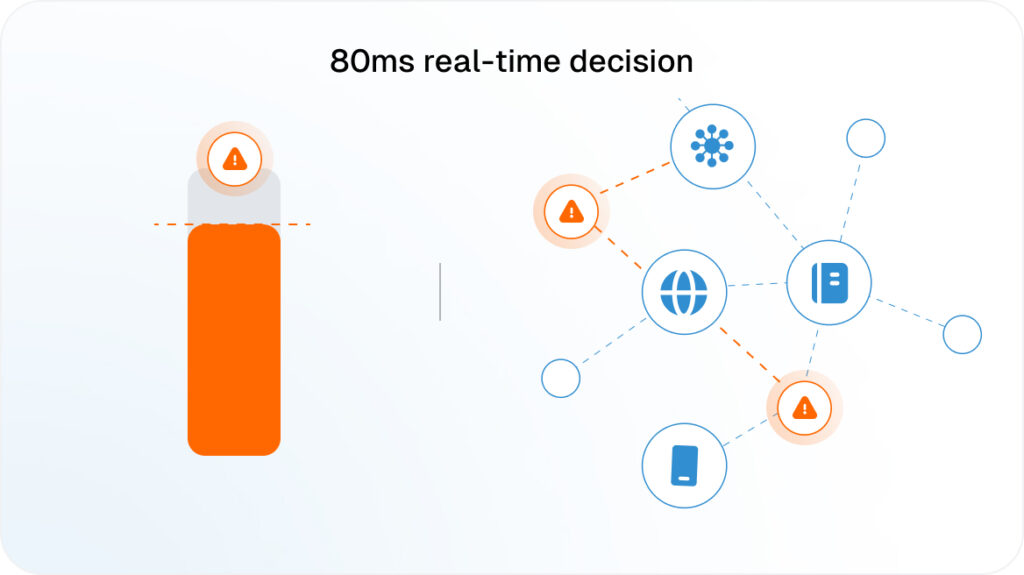
The architecture was designed to support both synchronous and asynchronous communication patterns while delivering high-throughput graph workloads. During the implementation, the platform demonstrated approximately 60,000 ingest transactions per second, 20,000 read transactions per second, and 60ms TP99 read latency, providing the performance required for real-time graph applications.
For fraud and risk, Intuit incorporated graph-derived features into machine learning models to improve customer recognition, reduce friction during sign-in, increase successful authentication, and strengthen fraud risk models.
TigerGraph enabled Intuit to connect customers, accounts, products, identities, behavioral signals, and risk attributes into a unified graph built on universal first-class entities. This foundation supported entity resolution and provided a consistent customer view across multiple products and services.
The architecture was designed to support both synchronous and asynchronous communication patterns while delivering high-throughput graph workloads. During the implementation, the platform demonstrated approximately 60,000 ingest transactions per second, 20,000 read transactions per second, and 60ms TP99 read latency, providing the performance required for real-time graph applications.
For fraud and risk, Intuit incorporated graph-derived features into machine learning models to improve customer recognition, reduce friction during sign-in, increase successful authentication, and strengthen fraud risk models.
The Results
The implementation delivered measurable improvements across infrastructure cost, graph performance, fraud detection, and machine learning.
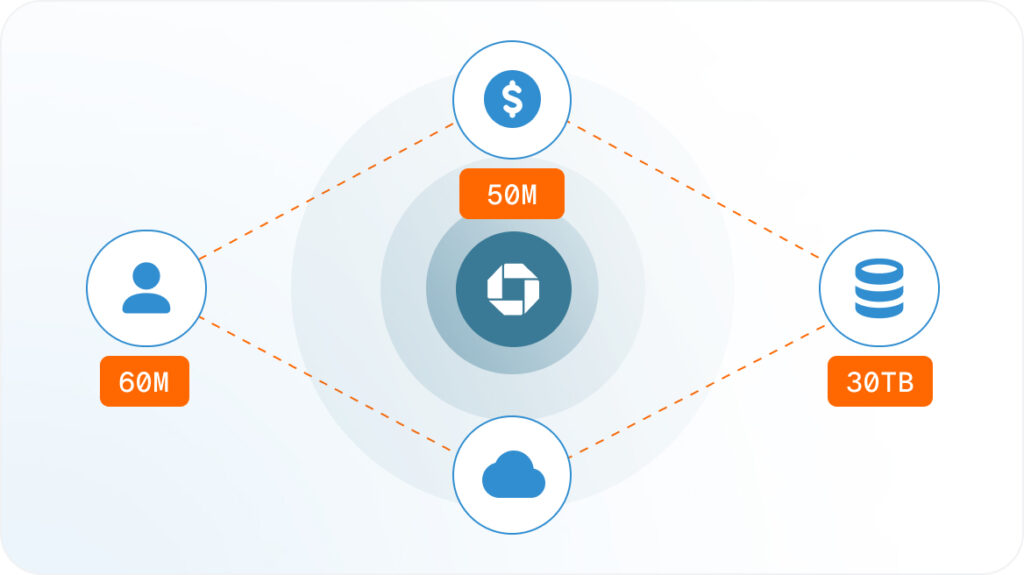
After evaluating multiple graph technologies and migrating from its existing graph platform, Intuit reduced graph infrastructure operating costs by 77% while improving scalability and operational performance.
By incorporating graph-derived features into fraud risk models, Intuit detected 50% more fraud risk events while improving model precision by 50%, enabling stronger fraud detection with fewer false positives.
The resulting graph platform now supports Customer 360, Identity Graph, graph-based machine learning, and real-time graph workloads, providing a scalable foundation for customer identity, fraud prevention, and enterprise graph applications.
After evaluating multiple graph technologies and migrating from its existing graph platform, Intuit reduced graph infrastructure operating costs by 77% while improving scalability and operational performance.
By incorporating graph-derived features into fraud risk models, Intuit detected 50% more fraud risk events while improving model precision by 50%, enabling stronger fraud detection with fewer false positives.
The resulting graph platform now supports Customer 360, Identity Graph, graph-based machine learning, and real-time graph workloads, providing a scalable foundation for customer identity, fraud prevention, and enterprise graph applications.
More stories


Ready to Harness the Power of Connected Data?
Start your journey with TigerGraph today!